

Understanding people. Changing minds. Changing behaviour. Protecting wildlife.
WildAid's mission is to inspire and empower the world to protect wildlife and habitats from critical threats.
Behavior change lies at the heart of this work. WildAid believes that the biggest opportunity for change on Earth is us.
While most wildlife conservation groups focus on protecting animals from poaching, WildAid's aim is to inspire change at all levels of society. We began by working to reduce global consumption of wildlife products such as elephant ivory, rhino horn and shark fin soup. With an unrivaled portfolio of celebrity ambassadors and a global network of media partners, WildAid leveraged hundreds of millions of dollars in pro-bono media support with a simple message: “When the Buying Stops, the Killing Can Too”.
Our award-winning ivory campaign contributed to China’s historic decision to ban the ivory trade in 2017, leading in turn to a significant decline in ivory poaching from Africa. Our work in China also contributed to a dramatic decline in demand for shark fins there, although the threats to sharks globally remain severe.
Creating incentives to conserve wildlife and habitats across Africa...
Since 2015, WildAid has been working in across Africa to highlight the urgency of protecting wildlife and habitats. Our work is focused on two crucial habits that are home to some of the continent's greatest concentrations of wildlife and most iconic species - the Congo Basin Ecosystem of Central Africa, and the Savanna and Rift Ecosystem of East Africa.
Our campaigns have two main goals, which are designed to reinforce incentives to conserve wildlife and habitats, and simultaneously reduce incentives to deplete nature unsustainably.
- Supporting community-led conservation.
WildAid believes community engagement, empowerment and stewardship is central to successful conservation. Only if communities benefit from living alongside wildlife -- and have agency to help manage land and natural resources -- can conservation work to the benefit of humans and animals. At WildAid, we want to change the narrative from “human-wildlife conflict” towards “human-wildlife coexistence” and “interdependence”.
To learn more about our work in Tanzania's Wildlife Management Areas, watch this short video:
- Reducing urban demand for illegal wild meat.
While wild meat can be an important source of protein for rural communities, the commercial trade in wild meat to Africa's fast expanding cities has become one of the continent's most pressing conservation issues. The sheer scale of the trade is placing unsustainable pressure on wildlife populations, including of endangered species, and reducing the prey base for predators like lions. The widespread use of snares in illegal hunting is not only cruel, often subjecting animals to slow and painful deaths, it is also indiscriminate, catching lions and other animals who were not the intended target.
WildAid aims to promote a sustainable model of wild meat consumption across Africa. In Cameroon, WildAid is engaged in a multi-year campaign to end the urban consumption of pangolin meat, which is already showing dramatic results. In Tanzania, we are about to launch a new campaign to end the consumption of illegal wild meat in the country's cities.
Watch this video to see how Cameroon's traditional leaders are speaking out against the unsustainable exploitation of nature and in favor of pangolins.
These two programs work together to create a powerful set of incentives to conserve wildlife and protect natural habitats at the local level.
Reducing urban demand for wild meat in Africa-- and demand for wildlife products from abroad -- undercuts the financial incentives to hunt.
Effective community-led conservation is all about ensuring that people benefit economically from living alongside wildlife -- boosting the incentives to protect animals and preserve their habitats.
We harness research, employ creative campaigns and work with some of Africa's most influential voices to change attitudes and behaviours, building greater support for wildlife conservation.
We take conservation beyond the conservation world and into the mainstream, reaching millions of people across the continent.
There are four other strands to our work in Africa.
- Celebrating and empowering African conservationists.
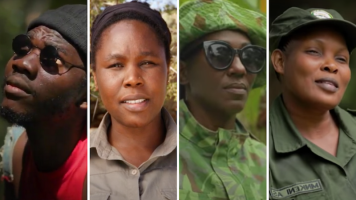 Across Africa, there are men and women defending nature — protecting vulnerable wildlife and habitats and creating a more sustainable future for their communities. We are celebrating their impact in a film series called "Nature’s Champions.”
WildAid believes in collaborating with, empowering and amplifying the voices of impactful and inspiring conservationists around the world. This reflects our core belief that that conservation is a team sport, and that it must include local people to be successful and sustainable.
- Encouraging the next generation to care about conservation.
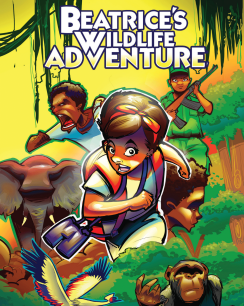 In 2023, WildAid worked with Wildlife Clubs of Uganda, Uganda Wildlife Authority and Elupe House of Comics and Animation to launch Beatrice’s Wildlife Adventure, a graphic novel that aims to empower Uganda’s youth to become champions of their natural heritage, and change the way they think about wildlife conservation. The book, distributed through after-school clubs, was accompanied by 44-page manual, outlining 21 interactive activities to captivate and inspire young people in a fun, hands-on way.
The initiative recognises the importance of instilling lasting values of respect and stewardship for wildlife and the environment at a young age, and that children can be important agents of change in their families and communities.
Beatrice's Wildlife Adventure has also made its way to Cameroon.
- Promoting a culture of accountability.
WildAid has established new telephone hotlines or promoted existing hotlines in Cameroon, Gabon, Kenya, Tanzania and Uganda, through which citizens can report suspicious activity related to wildlife crime, on a toll-free and anonymous basis.
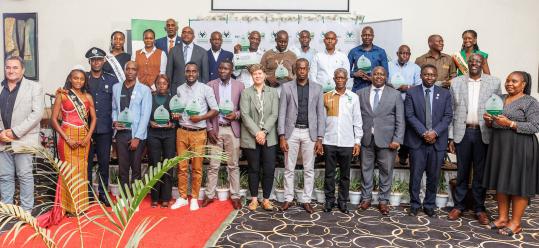
We have also established media awards in Uganda and Gabon to celebrate the best in conservation reporting. The Uganda Conservation Media Awards (above) are already in their fourth year and are helping not only to encourage more and better reporting, but bringing conservation issues into the public sphere. The Gabon Environmental Media Awards were launched in 2026.
- Encouraging stronger enforcement of laws, especially against wildlife trafficking.
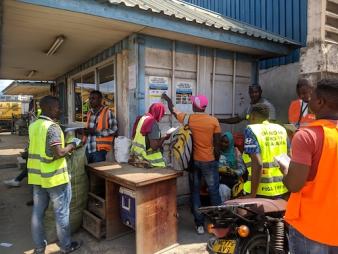
As WildAid creates stronger social norms around conservation, it makes the job of law enforcement easier, thanks to greater public support.
But we also work in key ports and border posts to raise awareness about the damage caused by wildlife trafficking across East Africa and in Cameroon, showing public and private sector workers what they can do to prevent it.
Together, we can achieve measurable impacts in protecting wildlife and key habitats.