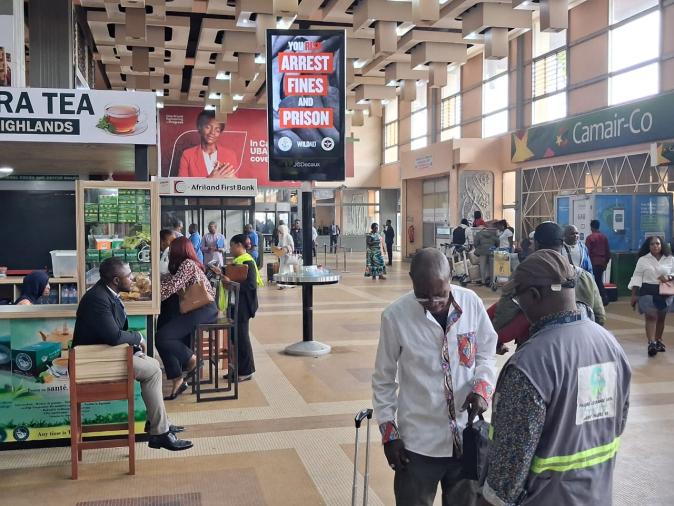

Yaoundé, June 29 - The Ministry of Forestry and Wildlife (MINFOF), in partnership with Cameroon Customs and WildAid, launched a new campaign at Yaoundé Nsimalen International Airport on Monday aimed at combating wildlife trafficking and the illegal transport of protected wildlife products across the country’s borders.
The first phase of the campaign uses digital screens at Yaoundé and Douala’s international airports to remind air travellers that carrying protected wildlife products is illegal and can result in arrest, fines and imprisonment.
MINFOF Inspector General Bruno Mfou'ou Mfou'ou said Cameroon's exceptional biodiversity represented irreplaceable natural heritage, as well as a source of economic, ecological, scientific and cultural capital. But this wealth, he said, has also attracted organised transnational criminals exploiting wildlife to feed an extremely lucrative global trade.
"This campaign reminds us that every citizen can play a part in the fight against wildlife trafficking," he said.
"As we know, purchasing a product derived from a protected species, transporting a trophy without authorization, accepting a suspicious package, or turning a blind eye to illicit activity contributes—sometimes unwittingly—to fueling international criminal networks."
"On the other hand, reporting suspicious behavior, complying with regulations, and raising awareness among those around you are acts of civic responsibility that help protect our wildlife heritage."

The campaign highlights some of the wildlife products most commonly trafficked through airports and borders, including elephant ivory, pangolins and their scales, leopard skins and illegal wild meat. It seeks to raise awareness among both domestic and international travellers about wildlife crime and the importance of protecting Cameroon’s natural heritage.
Head of the Central Customs Sector Marthe Nseke Maboa said the illicit trafficking of wild fauna and flora uses the same routes, logistical methods, and tactics as the trafficking of narcotics, weapons, counterfeit medicines, and other prohibited goods.
"Consequently, ports, airports, and border crossings have become strategic locations where a significant part of this battle is waged," she said, noting that Cameroon serves as a country of origin, transit, and, at times, destination for these criminal flows.
"I also wish to address all customs personnel serving at our ports, airports, and land border crossings: you are the State's first line of defense against the criminal networks that plunder our natural heritage," she said.
"Every rigorous check, every piece of intelligence acted upon, and every shipment inspected with professionalism contributes directly to protecting our biodiversity and upholding Cameroon's international commitments. I urge you to maintain a high level of vigilance and to carry out your mission with the same determination and sense of duty."
Cameroon is home to some of Africa’s most iconic wildlife, including forest elephants, pangolins, gorillas and chimpanzees. Yet the country remains both a source and transit point for illegal wildlife products destined for international markets. As key international gateways, airports play a critical role in preventing the movement of wildlife products across borders and disrupting trafficking networks.

The campaign forms part of a broader partnership between MINFOF, Cameroon Customs and WildAid to strengthen awareness of wildlife crime and support enforcement efforts at airports, ports and border crossings across Cameroon.
"Wildlife trafficking threatens endangered species, fuels organised crime and damages livelihoods,” said Simon Denyer, Africa Program Manager at WildAid. “This campaign demonstrates Cameroon’s commitment to protecting its wildlife and ensuring that wildlife crime is treated as a serious offence."
Cameroon passed a landmark new Wildlife and Forest Law in 2024 that significantly strengthened penalties for environmental crimes, including trafficking in protected species, with heavy fines and maximum prison sentences of 20 years. The passage of the law marked a strong demonstration of the government’s commitment to protect the country’s natural heritage.
Future phases of the campaign will expand outreach to maritime ports, and land border crossings, helping strengthen knowledge among frontline workers about wildlife laws, improve detection of wildlife trafficking and encourage reporting of suspicious activity.