

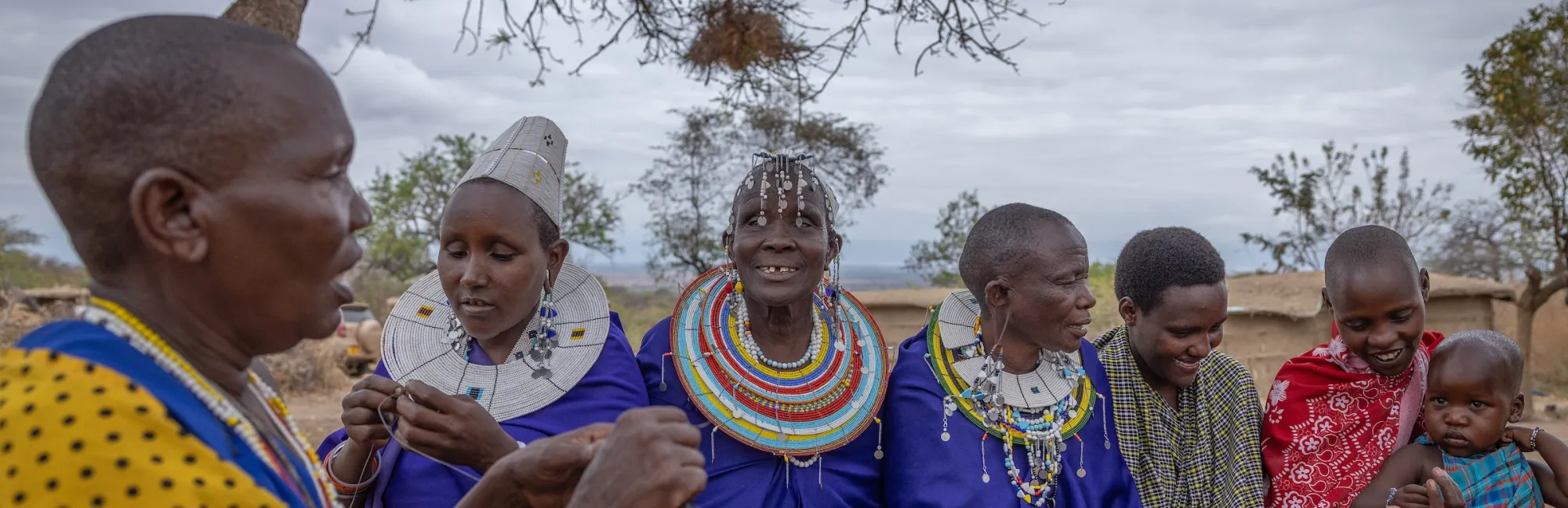
WildAid uses its communications expertise to build public understanding of and support for community-led conservation.
WildAid believes community engagement, empowerment and stewardship is central to successful conservation. Only if communities benefit from living alongside wildlife -- and have agency to help manage land and natural resources -- can conservation work to the benefit of humans and animals.
At WildAid, we want to change the narrative from “human-wildlife conflict” into “human-wildlife coexistence” and “interdependence”.
Tanzania
Tanzania has the largest wild lion population in Africa, with at least 40 percent of the continent’s lions, and the third largest African elephant population. It has 22 national parks, with an impressive 39 percent of its land officially protected for wildlife. Yet much of Tanzania’s wildlife still spends all or part of its time roaming outside or between national parks. Partly as a result, wildlife in Tanzania faces an array of threats, including conflict with humans, bushmeat hunting, poaching, habitat loss and climate change.
For the future of conservation, it is vital to find a way for humans and wildlife to live alongside each other. We believe Tanzania can be a model for this for the rest of Africa. We also understand that communities that earn money from keeping wildlife alive are more likely to protect and conserve it, leading to a reduction in hunting, poaching, and retaliatory killings of iconic species.
WildAid is committed to supporting community wildlife management areas (WMAs) in Tanzania, in partnership with the Honeyguide Foundation and the Community Wildlife Management Area Consortium. WMAs have been established to protect wildlife and their habitats on key migration routes and dispersal areas outside core protected areas, while providing economic opportunities for local communities through wildlife-based businesses. The consortium aims to establish 12 financially self-sustaining WMAs, with income from tourism and carbon credits funding their activities and encouraging communities to preserve wildlife resources.
But it is equally important to bring Tanzania and Tanzanians along on this journey. The success of community-led conservation through WMAs depends as much on people’s beliefs, incentives and everyday decisions as on ecology and conservation management.
Today, WMAs are often trapped by perception challenges, with communities often seeing wildlife through the prism of conflict and cost, while policymakers focused on development may not see WMAs as tools for growth and the wider public may not understand the national importance of community-led conservation.
When these perceptions persist, WMAs remain under-supported, under-invested and underperforming. Wildlife habitat is converted for agriculture, conflict increases and opportunities are lost.
Changing the narrative means reframing community-led conservation from a perceived trade-off into an approach that delivers both development and conservation outcomes: one that can support livelihoods, strengthen local governance and protect landscapes of national and global importance.
Gabon
Gabon is home to one of the world’s largest and most diverse wild ecosystems — and a country showing what large-scale nature protection can look like. It is one of the most densely forested countries on Earth, with nearly 90% of its land mass covered by trees. It sustains roughly two-thirds of Africa’s remaining forest elephants, as well as gorillas, hippos, chimpanzees, and pangolins.
In Gabon, WildAid works with Conservation Justice and Brainforest Gabon to mobilize communities living within and alongside forests to take action to conserve natural resources.
We educate forest-adjacent communities about laws and regulations, about their rights and responsibilities, about sustainable resource use and about conservation. The aim is to help communities benefit from their environment in a sustainable manner, and to foster community pride in preserving natural resources, so that environmental crimes gradually become socially unacceptable.
Working with the government of Gabon, we are also in the process of establishing a nationwide toll-free reporting hotline to allow these communities to report environment crime and suspicious activity in their forests.
Cameroon
Ebo Forest is located about 60km from Cameroon’s largest city Douala. Stretching over 1,500 square km, it is the most functionally intact ecosystem in the Gulf of Guinea forest region. Not only is it home to 40 communities who have been living off its resources for decades, it is also considered the most important place in Cameroon for botanical research, providing shelter to diverse and endangered fauna such as gorillas, forest elephants, drill monkeys and a rare species of Nigeria-Cameroon chimpanzee, who are the only known chimp population to both crack nuts and fish for termites. Ebo Forest also holds roughly 35 million tonnes of carbon making it a site of global importance for combating climate change.
This has made Ebo forest a rich target for its resources - particularly wood. In 2020, the government of Cameroon government opened up part of the Ebo Forest for logging. This would not only have resulted in the catastrophic loss of habitat for many endangered species, but also for the communities who depend on the forest for food, water and medicine and access to important cultural and ancestral sites that lie within it.
Thanks to a global outcry and local and international media coverage, the decree was swiftly reversed. However, the threat to Ebo remains.
In March 2021, WildAid launched a national media campaign including videos, billboards and social media to rally public and political support for keeping Ebo Forest free of commercial exploitation and instead allowing for sustainable land-use management. The work to protect Ebo Forest continues